



The firework season is an exciting time of year, with Halloween, Bonfire Night and New Year’s just around the corner, there is so much during this season to celebrate. Often with all of these events comes the loud and unpredictable noise of fireworks, which for our furry friends, can be a frightening and overwhelming time.
The best thing we can do for our pets is make the whole experience less stressful. There are a few ways to support your pets and this will vary dependent on their species, age and to what degree of noise phobia they have.
Desensitisation
If you have a new puppy, now is a great time to introduce desensitisation training. Puppies learn from their early experiences, often shaping them into the dog they grow up to be. If your dog’s first exposure to fireworks is unsettling and frightening, this can increase the likelihood of them developing noise fears and phobias later in life. By introducing desensitisation training early and investing the time in their wellbeing in a controlled way, the hope is that they develop into resilient and confident puppies ready for the firework season.
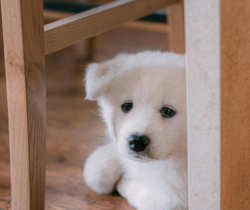
Before you get started it is really important to have a basic understanding on body language and behaviour of dogs. Understanding and recognising signs, however subtle, that your puppy may show because of fear and anxiety will help you introduce new sounds and situations positively.
Signs of Fear and Anxiety in Dogs
- Barking and/or vocalising more than usual
- Jumping up
- Panting, lip licking and/or dribbling
- Restlessness, pacing, running away
- Hiding, trembling and/or shaking, holding their tail between their legs
- Being destructive
Dogs Trust have a great resource if you want to get started on firework training with your puppy this month ready for the firework season!
Positive Reinforcement
For puppies experiencing fireworks for the first time, whether during desensitisation or during their first fireworks night, ensure you make it fun. Praise and reward positive behaviours, such as being calm and settled, with toys, treats and strokes. This will help distract and support your puppy, strengthen your bond and make those cosy nights indoors a positive experience. You should never punish your puppy, if they toilet indoors or vocalise, they may be doing this because they are frightened. Don’t forget, positive reinforcement is a suitable form of training for all pets during firework season!
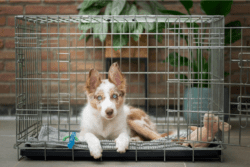
Creating a Safe Space For Your Pet
This is useful for teaching dogs on how and where to relax, by giving them a positive, safe space to go to in general day to day life if they are feeling anxious or overwhelmed. During fireworks season, it can give your pet somewhere to go when they are scared and they are more likely to use it if they have practiced using it. So why not start teaching your dog now!?
TOP TIPS
- Choose somewhere that your pet will like to go.
- Use a place in the house which is muffled from the outside, such as a room in the middle of the house or a room with small windows.
- Choose someone quiet, away from too much footfall, however some dogs will take comfort in being close by to their owners.
- Make it cosy with a comfortable bed, lots of blankets, if using a crate, cover the sides with a thick vet bed to sound proof it. Tailor the space to your dog, some may prefer to be fully covered, whereas others may feel safer with being able to lookout.
- Never use for punishment or force your dog in there.
- Reinforce it as a positive space – feed meals in there, give Kongs and chews in there or randomly hide treats for a surprise. Praise them greatly if they choose to go there of own accord.
- Make sure it is a big enough space for them to lie down, stand and turn around.
- Leave worn clothes of yours in there so it has a familiar, comforting scent.
- Ensure everyone in the family knows where your dog’s safe space is and for them to left alone if the seek shelter in there.
Severe Noise Phobias
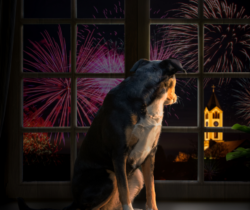
If your dog has a severe noise phobia and shown signs in the past of being scared of fireworks. We would advise seeking advice from your vet or a canine behaviourist. Your vet will be able to check whether there is any medical conditions contributing to their noise phobia. If you dog has a severe noise phobia, we would always advise seeking help and support from a qualified canine behaviourist specialising in fear based behaviours, rather than seeking to try and manage it yourself yourself as it can do more harm than good if done so incorrectly. A behaviourist will be able to support you and your dog in a number of ways with a structured plan, with gradual exposure to sounds alongside positive reinforcement, desensitisation and counter conditioning. Furthermore, there is the option of licensed medications to manage noise phobias, which can be prescribed from vets and canine behaviourist’s if it is warranted for your dog.